
Your phone buzzes. It’s a message from your ex, and it’s angry, accusing or just plain nasty. Your heart rate jumps and you want to fire back. Stop. How you reply in the next few minutes can affect your co-parenting relationship, your wellbeing and, if things go to court, how you come across to a judge.
Step 1: Don’t reply straight away
Unless it’s urgent and about your child’s safety, you don’t need to answer immediately. Put the phone down. Make a drink, go for a walk, wait an hour if you can. A reply written in anger is almost always one you’ll regret.
Step 2: Find the actual question
Hostile messages often hide one practical point under a lot of blame. Look for it. Is there a question about a handover, a cost or the children’s plans? That’s the only part you need to answer.
Step 3: Use the BIFF approach
A widely used method for high-conflict messages is BIFF:
- Brief: a few sentences. The longer the reply, the more there is to argue with.
- Informative: stick to facts.
- Friendly: a simple “Thanks for letting me know” goes a long way.
- Firm: be clear about what will happen, then end the conversation.
An example
Their message: “You’re ALWAYS late. You clearly don’t care about the kids. If you’re late again on Saturday I’m not handing them over. Typical.”
A reply that escalates: “I’m not always late, you’re the one who changed the time last month. Don’t you dare threaten me with the kids.”
A BIFF reply: “Thanks for your message. I’ll be there at 10am on Saturday as set out in our arrangements. If anything changes I’ll let you know by Friday evening.”
The BIFF reply answers the practical point, doesn’t take the bait and would read well if a judge ever saw it.
Things to avoid
- defending yourself against every accusation
- bringing up the past
- sarcasm, swearing or capital letters
- copying in friends or family
- discussing adult issues in front of, or through, the children
When to get help
If messages are threatening, constant or make you feel unsafe, keep a record and don’t engage beyond what’s necessary for the children. Speak to a solicitor about your options, and contact the police if you’re in danger.
How Chlikk CoParenting helps
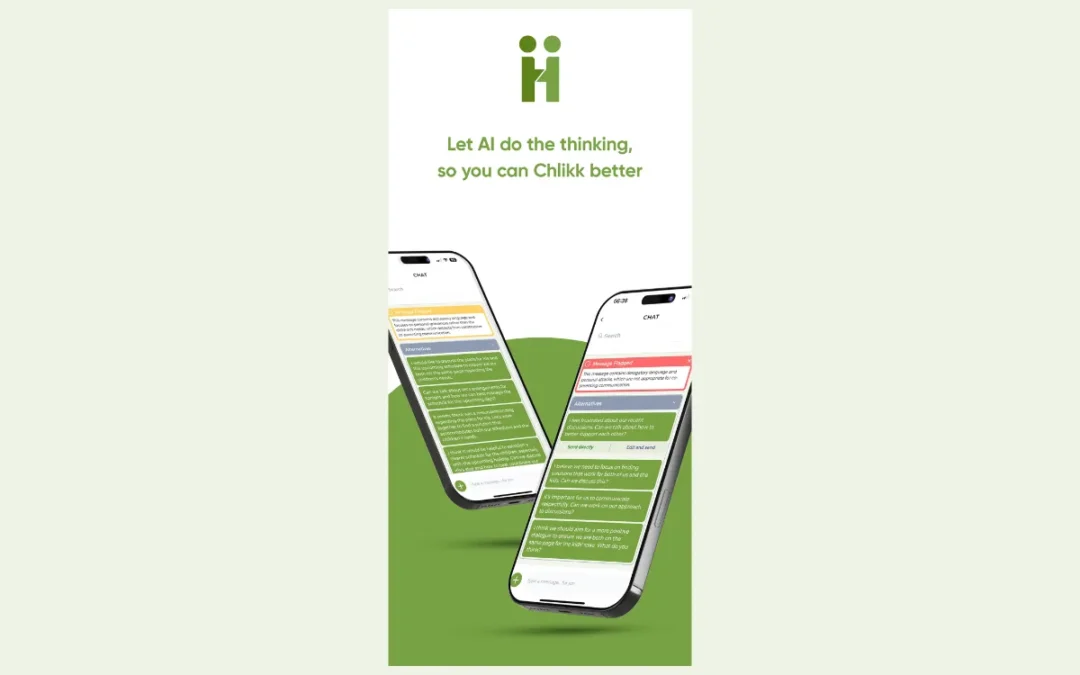
Chlikk CoParenting is designed for exactly these moments. CoBreather™ Pro flags messages that could escalate a conflict and suggests calmer, child-focused rewrites before you hit send. CoGuard™ checks your wording against your court order and gently alerts you if it could cause a problem. You always decide what to send, and every message is timestamped and kept as a clear record.
This article is general information for parents in England and Wales, not legal advice. For advice on your situation, speak to a family law solicitor or mediator.